New WhatsApp Business pricing: what changes on October 1, 2026 and how to make it work for you
Until September 30, 2026, replying to a customer on WhatsApp within 24 hours cost your business nothing. Starting October 1, Meta charges for every one of those replies, whether a person or an AI agent writes them.
It sounds like bad news. For most small businesses it isn't, and for the ones that serve their customers well it can be an advantage. This article explains how the model used to work, how it works now and what you should do starting today.
The change in 30 seconds
- Free-form replies are now charged. Every text, image or document you send inside the 24-hour window is charged per delivered message.
- You get 1,000 free every month. Every WhatsApp Business number gets 1,000 free service messages per month. Charges start at message 1,001, and unused messages don't roll over.
- Utility templates sent inside the window are charged again, too. They had been free since July 2025.
- What your customers send you is still free. Meta only charges for what your business sends, and only if it's delivered.
- Click to WhatsApp ads still open 72 free hours, marketing templates included.
The two clocks that govern every conversation
To understand what you pay, you need to separate two things that almost everyone mixes up.
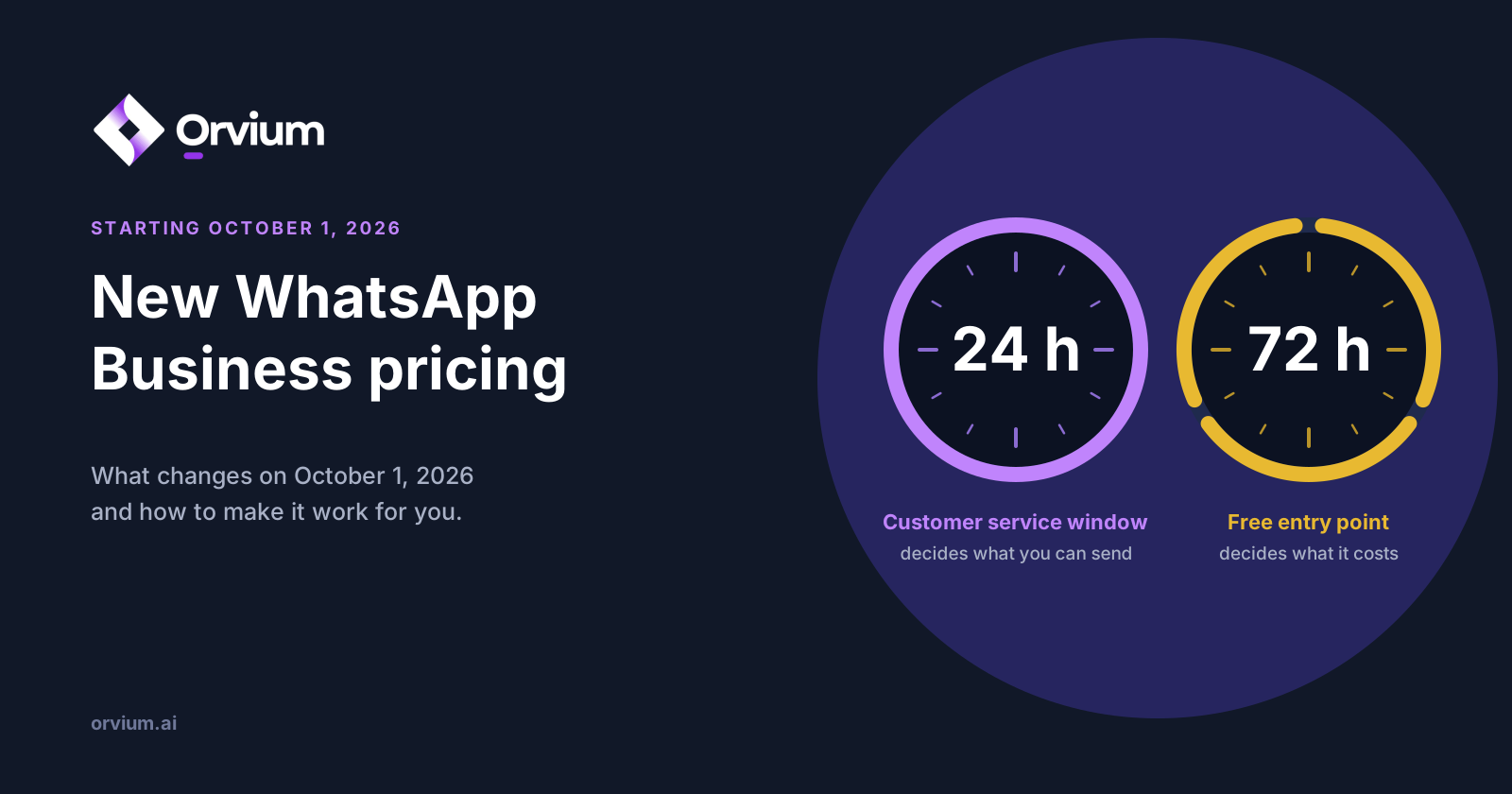
The customer service window (24 hours) decides what you can send. It opens when the customer writes to you or calls you, and it restarts with every message they send. While it's open you can reply with free-form text, images or documents. Once it closes, the API only accepts approved templates.
The free entry point window (72 hours) decides what it costs. It only opens when the customer arrives from a Click to WhatsApp ad or from the button on your Facebook Page, and writes from the app on their phone. It starts when you reply, not when they write. If you don't reply within the first 24 hours, it never opens. And it doesn't restart: it's a fixed 72 hours.
Use the selector to compare before and after:
Entry via a Click to WhatsApp ad
Also applies to the call-to-action button on a Facebook Page. The customer has to be on the Android or iOS app: from WhatsApp Web or desktop, the free entry point window doesn't open.
- Free
- Charged
- Not allowed
How it worked until September 30
- Free-form replies inside the 24-hour window were free (since November 2024).
- Utility templates sent inside the window were free too (since July 2025).
- You paid for marketing templates, for authentication templates and for any template sent while the window was closed.
In practice, a business that only answered the people who wrote to it could run its WhatsApp with a Meta bill close to zero.
How it works starting October 1
- Every free-form reply inside the window is a service message and is charged per delivered message, after the month's 1,000 free ones.
- A service message costs the same as a utility template in your customer's country. The price varies by country, so check it in Meta's rate table.
- Utility templates inside the window are charged again.
- Nothing changes for marketing and authentication templates: they're charged as before.
- The 72-hour window from an ad is still free for everything.
The difference is clear when the customer arrives any other way: a wa.me link, a QR code, the link in your Instagram bio or a Meta lead form. There's no free window there, only the 24-hour clock:
Entry through any other route
A wa.me link on your website, a QR code, the link in your Instagram bio, a Meta lead form, or the customer replying to a template you sent. None of these opens the free entry point window: only the 24-hour clock runs.
- Free
- Charged
- Not allowed
The full matrix
What you can send, and what it costs, in every combination of windows:
Decision matrix
What the platform can do in each combined state.
| State | Free-form text and media | Marketing template | Utility template | Authentication template |
|---|
Why we see it as an opportunity
1. Now the winner is whoever replies best, not whoever replies most. Billing is per message. Five short, fragmented messages cost five times what one complete answer costs. An agent that understands the question and resolves it in a single message no longer just serves better: it also costs less.
2. Click to WhatsApp ads become your most efficient channel. You get 72 free hours to qualify, quote, follow up and close, even with marketing templates. If you invest in advertising, sending those conversations straight to WhatsApp is the best decision you can make this quarter.
3. Speed now has a concrete price. The 72 free hours only open if you reply within the first 24. A lead who writes at eleven on a Saturday night and doesn't hear back until Monday didn't just go cold: they cost you the free window. An agent that replies instantly never lets it slip.
4. For many small businesses, the real cost will be low. With 1,000 free service messages per number each month, a business with moderate volume may pay very little. The one that will feel the change is the business that replies a lot, and badly.
What to do now
- Check your payment method in Meta. Starting October 1, Meta won't deliver service messages from accounts that don't have a payment method on file. If you haven't added one yet, do it today. If your replies aren't getting through, check this first.
- Measure how many messages you send per conversation. That's the number that now sets your cost.
- Check the rates for the countries where your customers are. The price per message varies a lot from one country to another.
- Send your ads to WhatsApp. If they point to your website or a form today, try Click to WhatsApp.
- Reply within the first 24 hours. Always, nights and weekends included.
- Consolidate your replies. Fewer messages, more complete ones.
How this works with Orvium
Orvium is a Meta tech provider: your WhatsApp Business account is yours, and Meta bills you for messaging directly, at each country's rates. Orvium's plans cover the platform and the AI agents. The details are in the "What you pay Meta for WhatsApp" section of our pricing page.
If you're already a customer, write to us and we'll review your account setup and your message volume with you.
Frequently asked questions
Am I charged for the messages my customers send me?
No. Meta only charges for the messages your business sends, and only when they're delivered.
Are the 1,000 free messages per account or per number?
Per WhatsApp Business phone number, every month. They don't roll over from one month to the next.
Does this affect the free WhatsApp Business app?
No. The change applies to the WhatsApp Business Platform (the API), which is what providers like Orvium use. The free phone app doesn't change.
How much does each service message cost?
The same as a utility template in your customer's country. Meta publishes its rates by country in its developer documentation.
If I reply with an AI agent, is it charged differently?
No. A free-form reply is charged as a service message whether a person or an agent writes it.
Does the 72-hour window open if the customer writes from WhatsApp Web?
No. It only opens if the customer arrives from the ad or the Facebook button using the Android or iOS app.
Source: Meta's official documentation, WhatsApp Business Platform pricing: non-template messages.
Let's talk about your WhatsApp
Orvium is an AI agent that answers, qualifies, books and follows up on WhatsApp, Instagram, Facebook and your website chat. With the new pricing, an agent that replies fast and completely isn't a luxury: it's the most efficient way to serve your customers.
Book a 20-minute demo