The AI sales agent flywheel: how to grow without hiring more people
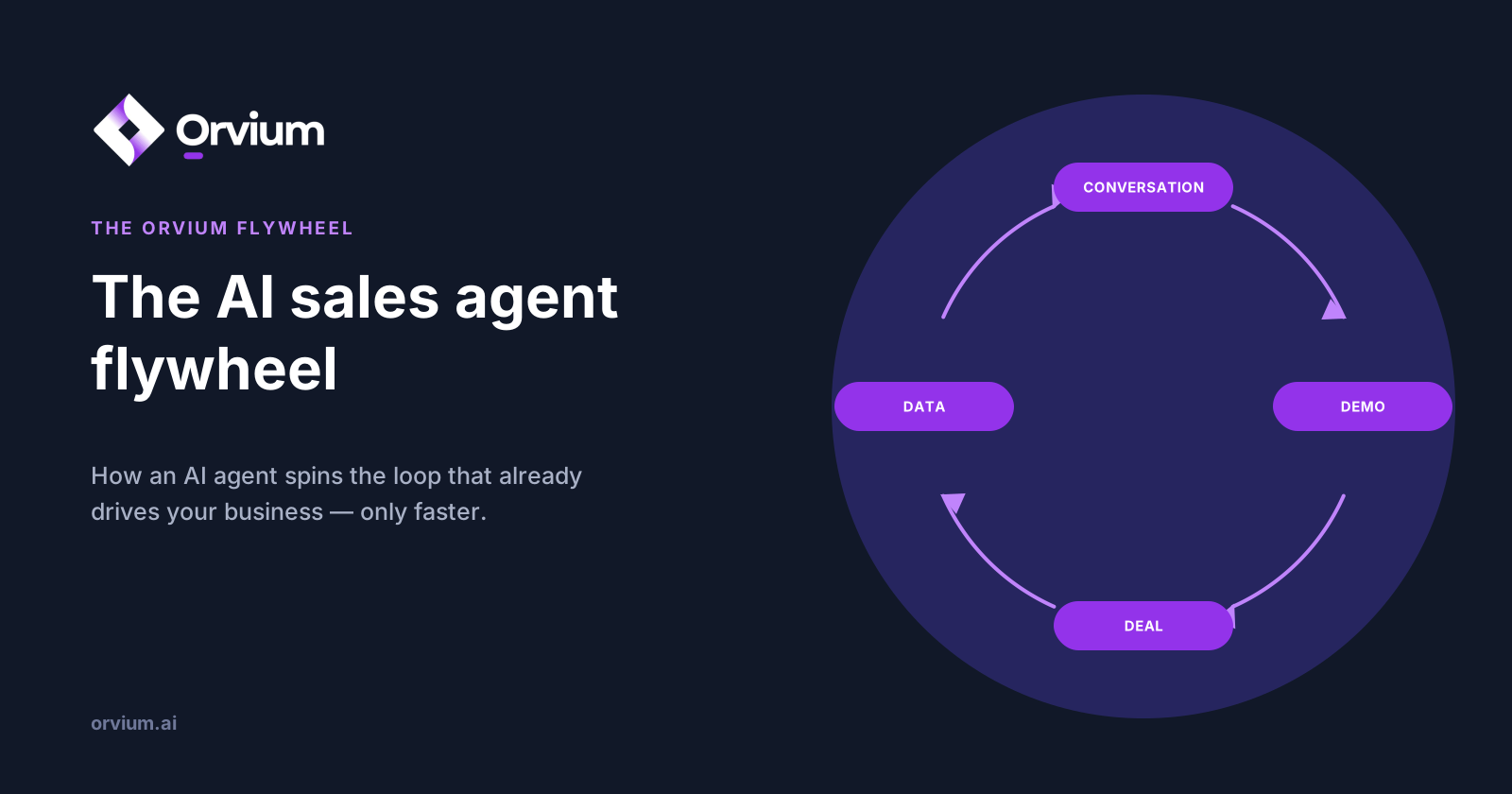
Almost every company buys AI the same way: they treat it as one more tool. They sign up, plug it into a channel, try it for two weeks and wait for something to happen.
Nothing happens. And they draw the wrong conclusion: "AI isn't ready for my business yet."
The problem is almost never the AI. The problem is that nobody connected it to the business's flywheel.
This article explains what that flywheel is, how to find yours, and the only two levers that exist for spinning it faster. By the end you'll be able to draw your own on a napkin.
Funnel vs. flywheel: why the model change matters
For twenty years the mental model of sales was the funnel: a hundred go in, three come out. Funnels are useful for measurement, but they have one serious flaw — they're a model with an ending. Everything that happens after the sale falls outside the drawing.
A flywheel models the same thing, but closed: the output becomes the input again. A closed deal doesn't end the process, it feeds it. Every conversation leaves behind information that makes the next one easier.
The practical difference is enormous:
- In a funnel, doubling growth means doubling the leads you pour in at the top. That's a linear model — and an expensive one.
- In a flywheel, doubling growth can mean spinning the same loop faster. That's a compounding model.
AI changes very little inside a funnel. Inside a flywheel it changes everything — because it's the only thing that can accelerate all four steps at once without adding headcount.
Step 1 · Find your core flywheel
Every business has its own way of growing. You need to find yours before you automate anything.
In any business that sells through conversation — WhatsApp, Instagram, Facebook, web chat — the core loop is almost always the same:
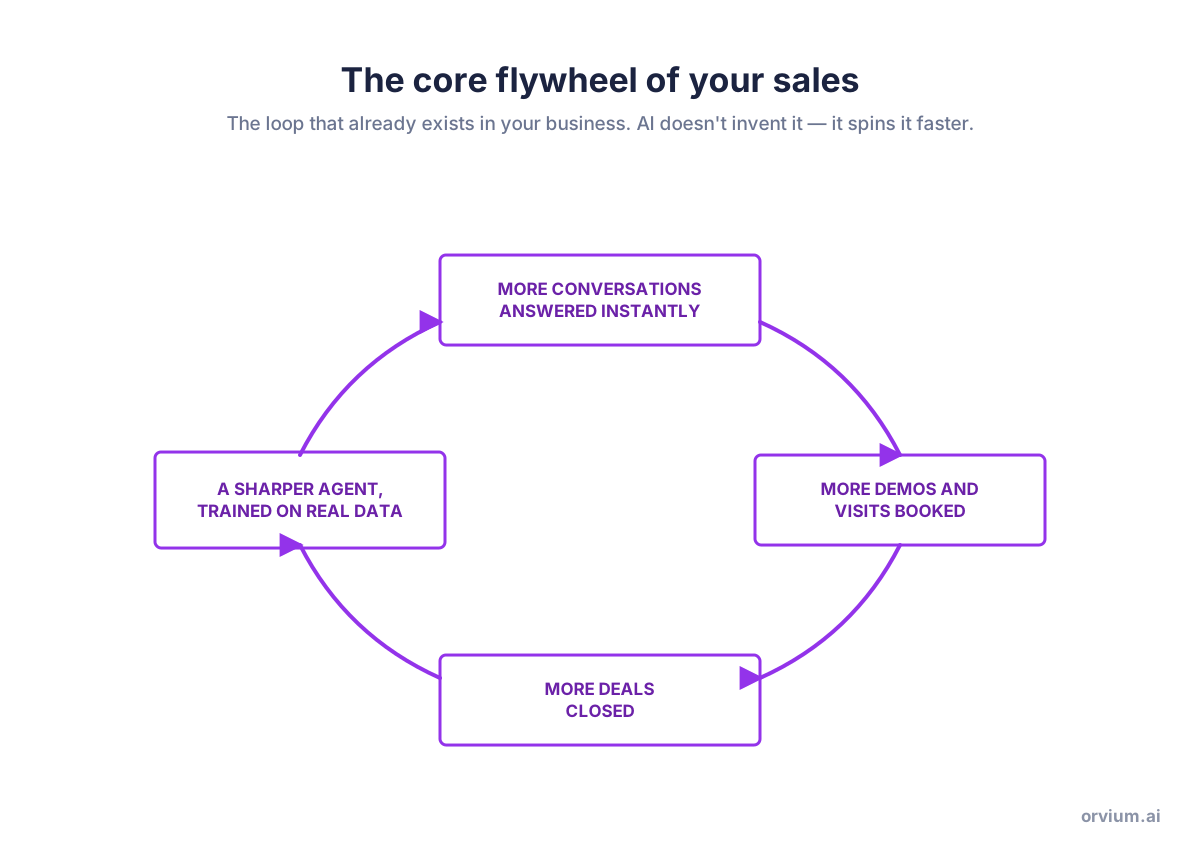
More conversations answered instantly → more demos and visits booked → more deals closed → a sharper agent trained on real data → and back to the start, answering better.
Read that again, because there's something important in it: that loop already exists in your business today, with or without AI. It's spinning right now. The only question is how fast, and how many turns you lose every night, every weekend, and every time someone writes while your team is in a meeting.
An AI agent doesn't invent the flywheel. It spins it faster.
How to draw yours
If your business doesn't sell through conversation, the exercise is the same. Answer these four questions and you have your loop:
- What's the first moment a stranger makes contact with you?
- What's the middle step where the buy-or-not decision gets made? (a demo, a visit, a quote, a trial)
- What happens when they buy?
- What does that purchase leave behind that makes the next sale easier? (data, reviews, case studies, referrals)
If the answer to question four is "nothing", you don't have a flywheel — you have a funnel. And that's your first job.
Step 2 · Push the flywheel: there are only two levers
Once the loop is drawn, growth work becomes surprisingly concrete. There are only two ways to spin a flywheel faster, and every initiative you can think of falls into one of them.
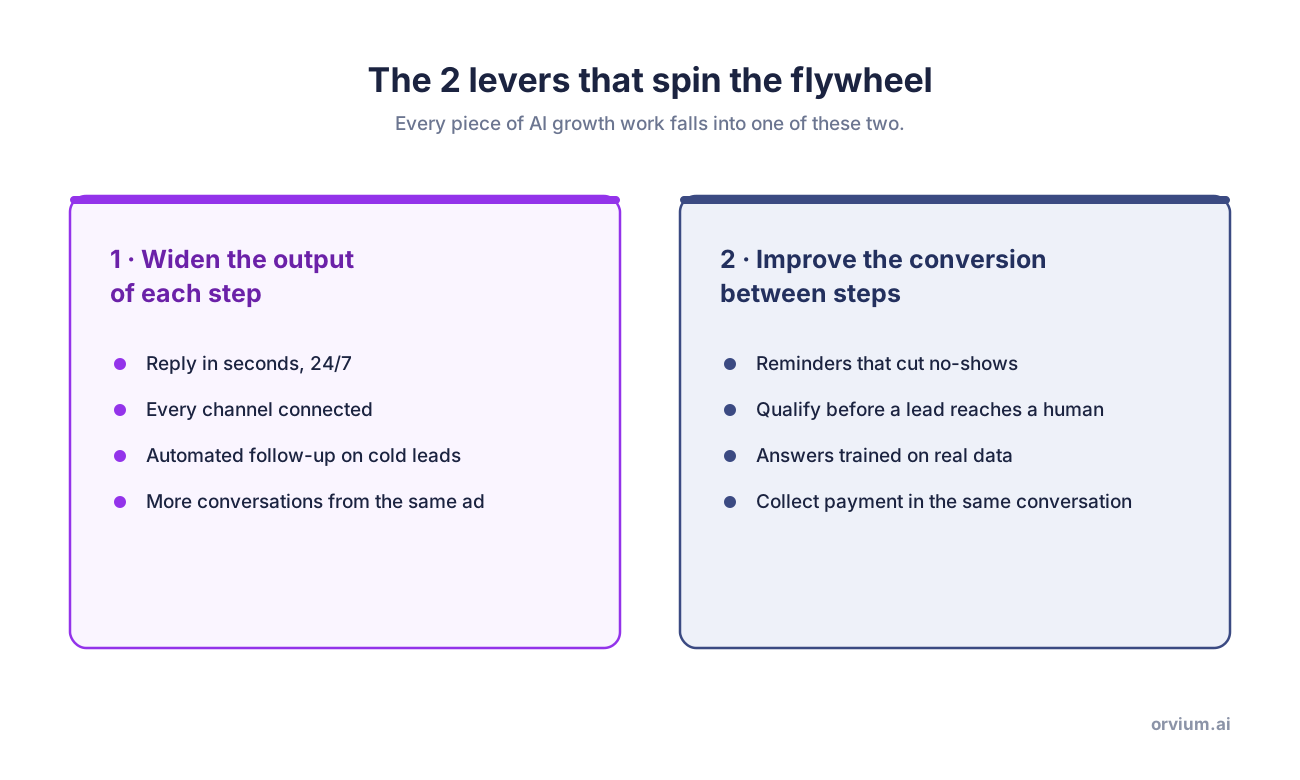
Lever 1 · Widen the output of each step
Make each step produce more without changing what comes before it.
Reply in seconds, 24/7. The most underrated and cheapest lever there is. A lead who writes at 11pm on a Saturday and gets an answer in twenty seconds is not in the same conversation as one who hears back Monday at 10am. It's literally not the same lead: the second one already got three other quotes.
Connect every channel. Every channel that isn't connected is a silent leak. Instagram, Facebook, WhatsApp and your website chat all need to land in the same place, with the same context and the same history.
Automated follow-up on cold leads. This is where most of the money is left on the table. A large share of the leads written off as dead only needed a second message three days later. Nobody sends it, because it isn't fun work and because there's no time. An agent always sends it, at the right moment, without getting tired and without sounding desperate.
Get more conversations out of the same ad spend. If you're already paying for traffic, the lever isn't a bigger budget — it's making sure none of the conversations that budget generates falls through.
Lever 2 · Improve the conversion between steps
Get a larger share to move from one step to the next.
Reminders that cut no-shows. Booking a demo is worthless if half of them don't show. A reminder 24 hours out and another one hour out moves that metric more than any improvement to your pitch.
Qualify before the lead reaches a human. The biggest cost of a sales team isn't salary — it's the hours spent with people who were never going to buy. If the agent asks about budget, urgency and use case first, your rep only walks into conversations that are already warm.
Answers trained on real data. Your market's objections aren't the ones in a generic playbook. They're the ones showing up in your conversations.
Collect payment in the same conversation. Every channel switch — "I'll email you the link" — is a chance to lose the deal. If payment happens in the same chat as the conversation, the step disappears.
The rule: if an initiative doesn't widen the output of a step or improve the conversion to the next one, it isn't growth. It's activity.
Step 3 · Know where the compounding is
This is where the model gets interesting, and where AI stops resembling any other tool.
Every growth initiative saturates. An ad burns out. A channel runs dry. A campaign that worked for three months stops working in the fourth. That's why growth teams live in a cycle of relaunching: every curve has a traction phase, an optimization phase, and then a plateau.
The agent is the exception, for one simple reason: every turn of the flywheel leaves data behind.
Which objection comes up most. Which question stalls the deal right before price. What hour your market actually replies. Which sentence gets someone to book and which one makes them disappear. Which product the people who later buy the big plan start with.
That data trains the next turn. And that's the difference between a cost and an asset: the loop doesn't just spin faster, it spins better. A rep who leaves takes that learning with them. An agent accumulates it.
The full flywheel: the 9 loops that accelerate it
With the three pieces together, here's the complete model. The violet loop in the middle is the flywheel. Everything around it is a loop that pushes it.
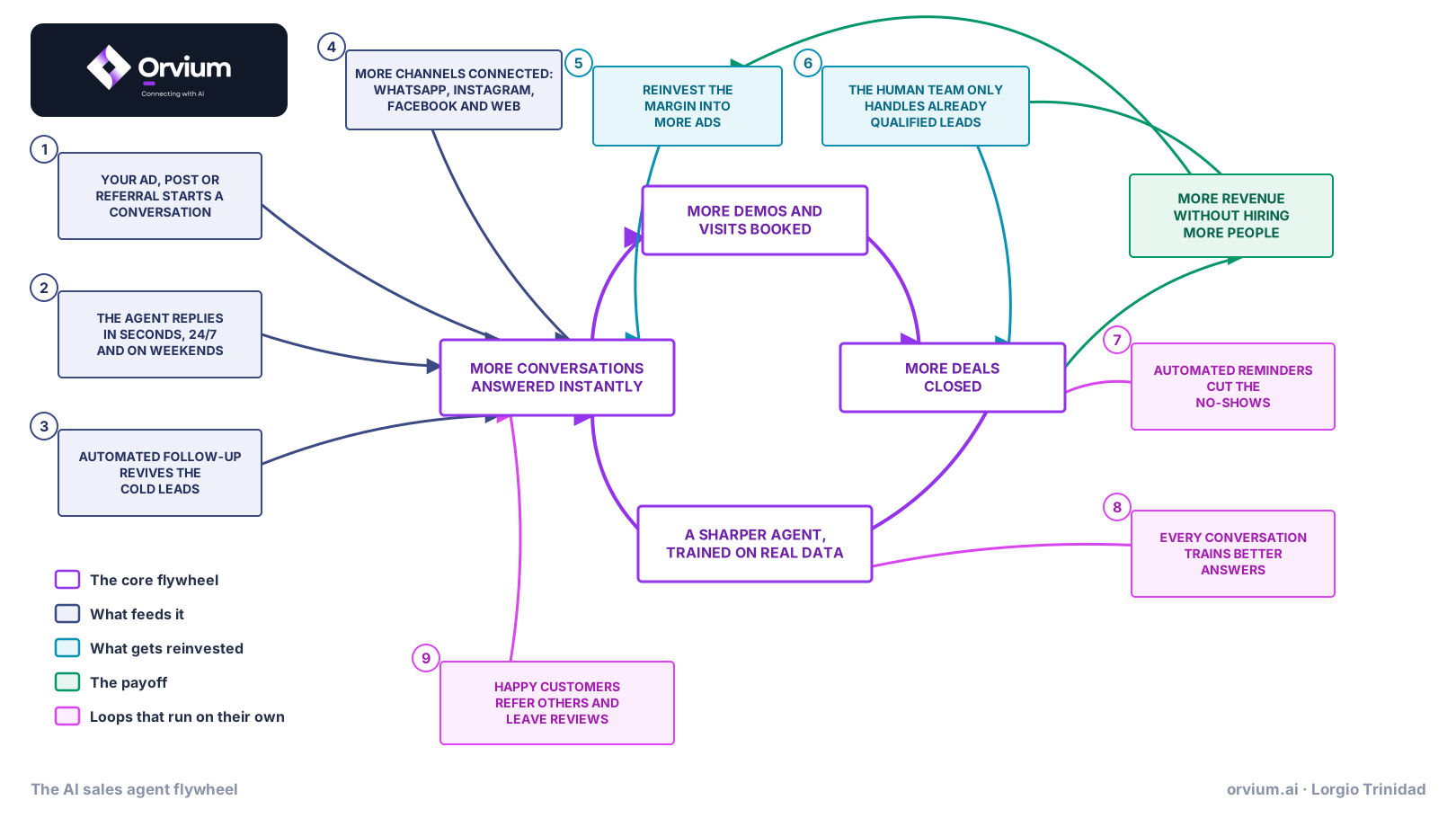
What feeds the flywheel (blue)
- Your ad, post or referral starts a conversation. This is the input. Without it there's no loop.
- The agent replies in seconds, 24/7 and on weekends. The biggest multiplier on step 1.
- Automated follow-up revives cold leads. Recovers turns you already paid for and had written off.
- More channels connected: WhatsApp, Instagram, Facebook and web. Widens the mouth of the loop without raising the budget.
What gets reinvested (cyan)
- The margin goes back into ads. The loop funds itself.
- The human team only handles already-qualified leads. Your most expensive hour gets spent where it actually moves the needle.
Loops that run on their own (magenta)
- Automated reminders cut no-shows. Turns booked demos into demos that actually happen.
- Every conversation trains better answers. The compounding from step 3.
- Happy customers refer others and leave reviews. The slowest loop to start and the hardest to copy.
The payoff (green)
More revenue without hiring more people. That's the model's output, not its starting point.
The 3 most common mistakes when connecting AI to a flywheel
1. Automating the wrong step. Almost everyone starts by automating the close, because it's the most visible step. But the close is usually the healthiest part of the loop. The leak is almost always in the first step — conversations nobody answered in time — and in follow-up. Measure before you automate.
2. Treating the agent as a cost center. If you measure it by "how many messages it saved", you'll optimize the wrong metric. Measure it in flywheel turns: conversations answered, demos booked, demos that actually happened, deals closed.
3. Not closing the data loop. An agent that answers well but whose conversations nobody reviews is a tool, not an asset. The monthly review of objections and stalled questions is what turns step 3 into compounding.
How to start this week
You don't need to redesign your operation. You need to measure one turn of the loop.
- Measure your real first-response time. Not the one you think — the one that comes out of last week's conversations, nights and weekends included.
- Count how many conversations died without a second message. That number is usually the most uncomfortable part of the exercise.
- Measure your show-up rate. Of the demos booked last month, how many happened?
- Draw your loop on paper. Four boxes, four arrows. Mark which of the four leaks most.
- Automate only that one. One lever at a time, measuring the full turn.
Frequently asked questions
Does an AI agent replace my sales team?
No. It changes where their hours go. The agent takes the part of the loop that's repetitive and time-sensitive — answering, qualifying, booking, reminding, following up — and your team steps in where a person still wins: the decision conversation.
How long before I see an effect?
The first lever — response time — shows up in week one, because it acts on leads you were already paying for. The compounding loops (data, reviews, referrals) take months. That's exactly why you start with the first one.
Does this work for a local business or only for large companies?
The loop is the same in both cases; only the volume changes. A beauty studio and a university with sixteen campuses lose leads for exactly the same reason: nobody answered in time.
What do I need in place before automating?
Three things: a channel where conversations actually arrive, clarity on what a qualified lead means for you, and a definition of the middle step you want to book. Nothing else.
Let's draw your flywheel
Orvium is an AI agent that answers, qualifies, books, follows up and collects payment across WhatsApp, Instagram, Facebook and your website chat — from prospect to payment in one conversation. Book a call and you'll leave with your loop drawn and the step that's losing the money.
Book a 20-minute demo